
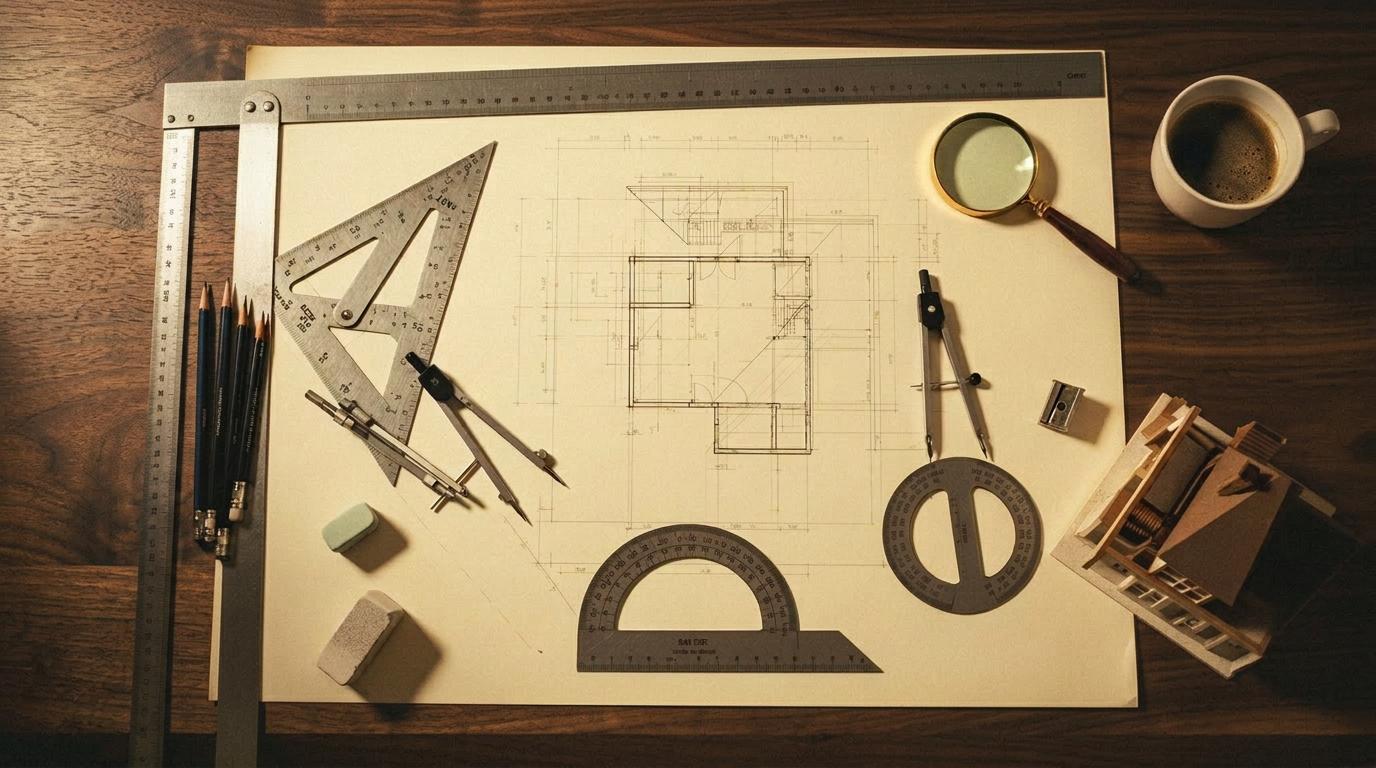
A homeowner’s guide to building with us.
Building a custom home on your property is a meaningful journey. Here is how we guide it — from first conversation through warranty — with one primary point of contact and a clear plan at every phase.
Setting Realistic Expectations
Typically 12–18 months from contract to move-in.
This page describes our custom home building process for projects on land you already own. Most builds move through three phases — pre-construction, construction, and warranty — and most take roughly twelve to eighteen months end-to-end. Timelines vary with design complexity, selections, permitting, weather, and supply availability. We will share an honest, project-specific schedule once your plans and selections are defined.
Ranges are typical for owner-property custom homes; actual schedules depend on design, selections, permitting, and weather.
From the start of pre-construction, you are assigned one primary point of contact — typically your Project Manager, or, on more design-intensive projects, your Interior Designer. They coordinate internally with the rest of the team so you always have one clear communication channel. Behind the scenes, the Project Manager continues to lead execution of the build.
We aim to respond within 48 hours maximum, typically sooner during active phases. We ask that you respond on a similar cadence so decisions and selections keep the project moving.
One primary point of contact — supported by a coordinated team.
Your primary point of contact on most projects. Leads execution of the build and coordinates the team internally.
On design-intensive projects, may serve as your primary point of contact. Works closely with the PM behind the scenes.
Runs the day-to-day on site — trades scheduling, quality, and safety — reporting to your Project Manager.
Owns service requests after move-in, schedules visits, and coordinates the 11-month walk-through.
Clear, consistent, and on a rhythm you can plan around.
- Response time
- We aim to respond within 48 hours maximum, typically sooner during active phases.
- Progress updates
- Regular photo and video updates, plus scheduled on-site meetings (typically monthly).
- Walk-throughs
- Framing, pre-drywall, pre-paint/tile, and final walk-through with your Project Manager.
- Site visits
- Always with your PM or an escort — active job sites have safety protocols.
Pre-Construction
Pre-construction turns your vision into thoughtful, build-ready plans. The pace here is mostly driven by design decisions, selections, and permitting timelines.
Initial Consultation & Needs Assessment
We meet personally and use a lifestyle questionnaire to understand how you want to live in the home. Sharing context early helps us:
- Clarify your vision and priorities
- Set realistic expectations from day one
- Sharpen the accuracy of the initial budget
- Save time and cost during design
- Build a strong homeowner–builder partnership
What to expectCome with inspiration photos, ideas, and a working budget. We will talk openly about what is achievable within those numbers.
Design Agreement
A focused agreement covering pre-construction work — architectural design and engineering — signed before the full construction contract. It defines deliverables, fees, and timeline so design can move forward with clarity.
Pay for design as design, with a defined fee structure (typically a percentage of anticipated project cost) — separate from the larger construction commitment.
Schematic design, floor plans, elevations, 3D renderings, structural engineering, and energy calculations, with a defined number of revision rounds.
Develop permitted, professional plans before signing a construction contract — and keep options open along the way.
Dedicated time for layout, style, and functionality decisions while changes are still inexpensive on paper.
Fully developed design supports an accurate construction estimate. We typically credit a portion of the design fee toward the construction contract if you build with us.
You retain ownership of your plans and can pace financing in logical stages rather than committing to everything at once.
What to expectThe Design Agreement typically runs 2–5 months: Concept → Developed Design → Permit-Ready Drawings.
Site Visit & Evaluation
Soil testing, survey, topography review, and utility check on your property.
What to expectSite findings sometimes call for foundation refinements or design adjustments that affect cost — we will walk you through any implications before moving forward.
Design Development
Your architect or our in-house designer develops detailed plans. A few rounds of revisions are normal and healthy.
What to expectYou review and approve plans at agreed milestones. Significant changes after this point typically become written change orders and can affect schedule and budget.
Budget Development & Financing
We prepare a detailed cost estimate based on approved plans, selections, and allowances. You secure construction financing with a draw schedule aligned to project milestones.
What to expectLender requirements such as appraisal and plan review can add 2–4 weeks to the pre-construction timeline.
Contract Signing
You sign the construction agreement, meet your project team, and receive the master schedule. Your custom home build is structured around a defined budget, approved selections, agreed allowances, financing milestones, and a clear written change-order process — rather than a single fixed lump sum that ignores real-world custom-home decisions.
What to expectAn initial deposit is due at signing, with the balance drawn against completed milestones on a defined schedule.
Material & Finish Selections
Cabinetry, flooring, countertops, fixtures, paint, and more. We provide a selection schedule with target dates so each trade has what it needs in time.
What to expectSelections drive the schedule. Late decisions can push milestones by several weeks. Upgrades after selections are documented as written change orders so cost and schedule stay transparent.
Permitting & Pre-Construction Meeting
We submit plans to the city or county. Once permits are issued, your Project Manager holds a pre-construction meeting with you to align on schedule, communication, site protocol, and what to expect in the first weeks on site. Design meetings are handled separately, with your designer.
What to expectPermitting typically takes 4–8 weeks, and longer in high-demand jurisdictions. We manage inspections on your behalf and keep you informed of meaningful milestones.
- Make selections by the target dates on your selection schedule.
- Respond to questions promptly — within 48 hours where possible.
- Approve change orders in writing so cost and schedule stay clear.
- Keep financing milestones on track with your lender.
Changes are normal — here's how they work.
Custom homes evolve. When you want to refine a detail or adjust a selection after construction is underway, we use a simple written process so cost and schedule remain clear.
Tell your PM what you'd like to change — by email, portal, or in a walk-through.
We document scope, cost, and any schedule impact in writing — no surprises.
Work proceeds only after you approve in writing. Your budget and schedule stay transparent.
Construction
Construction moves through clearly defined phases. You receive regular progress updates with photos and video, plus scheduled on-site meetings (typically monthly, with additional walk-throughs at key milestones). The schedule below is a representative example for an approximately 4,000 sq ft home; a useful rule of thumb is roughly 10 weeks per 1,000 sq ft, adjusted for design complexity.
Site Preparation & Foundation
Clearing, grading, excavation, footings, and slab or pier-and-beam foundation work.
What to expectSignificant weather events (heavy rain, hard freeze) can pause work for short periods.
Framing & Roofing
Framing, windows and doors installed, roof system completed.
What to expectFraming walk-through with you — often the first moment the home truly takes shape.
Rough-Ins (Plumbing, Electrical, HVAC)
Mechanical systems installed and inspected before insulation.
What to expectPre-drywall walk-through — your opportunity to see wiring, plumbing, and HVAC routing before walls close.
Insulation, Drywall & Exterior Finishes
Insulation, drywall, exterior siding, stone or brick, and paint preparation.
What to expectThe site remains active with normal dust and noise during this phase.
Interior Finishes
Cabinetry, countertops, flooring, trim, fixtures, and appliances.
What to expectPre-paint and tile walk-throughs to confirm selections are coming together as planned.
Final Touches & Landscaping
Final paint, cleaning, driveway, and landscaping (where included in scope).
What to expectFinal municipal and internal quality-control inspections wrap up this phase.
- Visit during scheduled walk-throughs — active job sites have safety rules and require an escort.
- We work to minimize change orders during construction; any changes are documented in writing with cost and schedule impact.
- Some delays are part of building (weather, materials, inspections). We share updates early and adjust the plan together.
- Payment draws follow completed milestones, verified by you and your lender before funds release.
Post-Construction & Warranty
At substantial completion, we transition into closeout and warranty. Our goal is a smooth handover and a long, supported relationship with your home.
Final Walk-Through & Punch List
You and your Project Manager walk the home together and document any remaining items. We aim to address punch-list items before closing whenever possible. If minor items remain, they are documented and completed promptly after closing on an agreed schedule.
What to expectPunch-list closeout typically takes 1–2 weeks of focused work.
Certificate of Occupancy & Closing
The municipality issues the Certificate of Occupancy, final payment is made, and keys are handed over.
What to expectMove-in readiness is the goal at closing. Any remaining punch items follow the agreed schedule documented at walk-through.
Warranty Coverage
Our warranty structure is designed to give you long-term peace of mind across workmanship, systems, and structure.
| Coverage | Duration | What's included | What's not |
|---|---|---|---|
| Workmanship & Materials | 1 year | Defects in labor and materials installed by Continental and our trades. | Normal wear, owner damage, deferred maintenance. |
| Systems | 2 years | Plumbing, electrical, and HVAC systems installed during the build. | Owner-supplied equipment, post-closing modifications. |
| Structural Warranty Offering | 10 years | Long-term coverage on qualifying structural components of the home. | Cosmetic items, soil movement outside coverage terms. |
| Manufacturer Warranties | Varies | Appliances, HVAC, roofing, windows, and similar — transferred to you at closing. | Subject to each manufacturer's terms and registration. |
You are welcome to engage a third-party inspector for your own peace of mind. Throughout construction, we use both municipal inspections and our own third-party quality inspections. Many homeowners find it most useful to schedule an additional independent inspection shortly before the two-year systems warranty period ends — after the home has been through a few heating and cooling cycles.
Warranty Claim Process
- Reach out in writing (email or portal) with photos and a brief description.
- We typically schedule a service visit within 7–14 business days for non-emergencies.
- Emergencies (no heat, major leak, structural concern) are responded to as a priority — typically within 24–48 hours.
What to expectNormal wear and tear, damage caused after move-in, or items affected by deferred maintenance are generally outside of warranty coverage.
11-Month Warranty Walk-Through
Around month eleven, we schedule a walk-through together to catch anything worth addressing before the first-year warranty period ends.
What to expectA helpful checkpoint to review any items together while first-year coverage is still active.
- Follow the Homeowner Maintenance Manual — seasonal checklists, filter changes, and routine care.
- Register manufacturer warranties for appliances and major systems.
- Maintain the home appropriately — some coverage depends on routine care.
- Landscaping, pest control, and utility account setup are homeowner responsibilities after closing.
Key Expectations at a Glance
- Timeline
- Typically 12–18 months end-to-end; weather, selections, and supply timing can shift the schedule.
- Communication
- One primary point of contact. We aim to respond within 48 hours maximum, typically sooner during active phases.
- Cost
- A defined budget with approved selections, agreed allowances, financing milestones, and written change orders.
- Your Role
- Timely selections, prompt responses, and written approval of change orders keep momentum strong.
- Our Commitment
- Build with care, communicate clearly, stand behind our work, and treat your home like our own.
Questions homeowners ask us most.
How quickly will you respond to my questions?
We aim to respond within 48 hours maximum, typically sooner during active phases. Urgent items are prioritized.
What if I want to change a finish or detail after construction has started?
Changes are normal on a custom home. We document the change in writing — scope, cost, and any schedule impact — and proceed only after you approve. We work to keep change orders minimal by getting selections defined during pre-construction.
What happens if weather or materials cause a delay?
Some delays are part of building. We communicate as early as we can, share the updated plan, and keep things moving on parallel tracks where possible.
Do I attend inspections?
You don't need to. We manage municipal and third-party inspections on your behalf and bring you in for scheduled walk-throughs at framing, pre-drywall, pre-paint or tile, and final.
Can I bring my own architect?
Yes. We work both with our in-house design partners and with architects you bring to the table. Either way, we'll define deliverables, fees, and timeline in a Design Agreement before construction.
How is cost handled — is the price truly fixed?
We use a defined budget with approved selections, agreed allowances, financing milestones, and a written change-order process. That structure keeps a custom home accurate and transparent — without the fiction of a single lump sum that ignores real decisions along the way.
Who is my point of contact?
You have one primary point of contact assigned during pre-construction — typically your Project Manager, or your Interior Designer on more design-intensive projects. They coordinate the rest of the team internally so you have one clear channel.
What's covered under warranty?
1-year workmanship and materials, 2-year systems (plumbing, electrical, HVAC), and a 10-year structural warranty offering. Manufacturer warranties on appliances, HVAC, roofing, and windows transfer to you at closing.
Take this guide with you.
Save this page as a PDF for your records, or subscribe to Continental Monthly to receive build notes, design ideas, and a GSM mission moment — once a month.
You will have one primary point of contact guiding you through every phase, coordinating the right specialists internally so the experience feels seamless from first meeting to move-in.
Begin Your Project